
Category: Technology and AI

Low-code and AI: who’s actually building tomorrow’s workflows
By 2026 developers outside formal IT will represent at least 80% of low-code tool users. By 2028, 90% of software engineers will use AI assistants to write code. Between these two trends lies the space where tomorrow's workflows are being built.

AI won’t eliminate legacy IT. But it can help you move past it
Vendor claims that GenAI will eliminate technical debt and automatically modernize legacy systems have inflated expectations. Gartner clarifies what AI can actually do for modernization, and what it can't.

How to measure an AI agent that actually works
45% of high AI maturity organizations keep their projects in production for at least three years. Only 20% of low maturity organizations do. The difference isn't the technology: it's the measurement. Here's what to measure and how to make the numbers actually useful.

When the AI agent must stop
The autonomy of AI agents is an advantage up to the point where it stops being one. Defining when an agent must stop and ask for human confirmation is not a technical limitation: it is a design choice that determines whether a system is reliable or dangerous.

Synthetic data is changing how AI gets trained
Synthetic data is artificially generated data used to train AI models, preserve privacy, and test systems. How it works, where it's used, and why adoption is growing in regulated sectors like healthcare and finance.
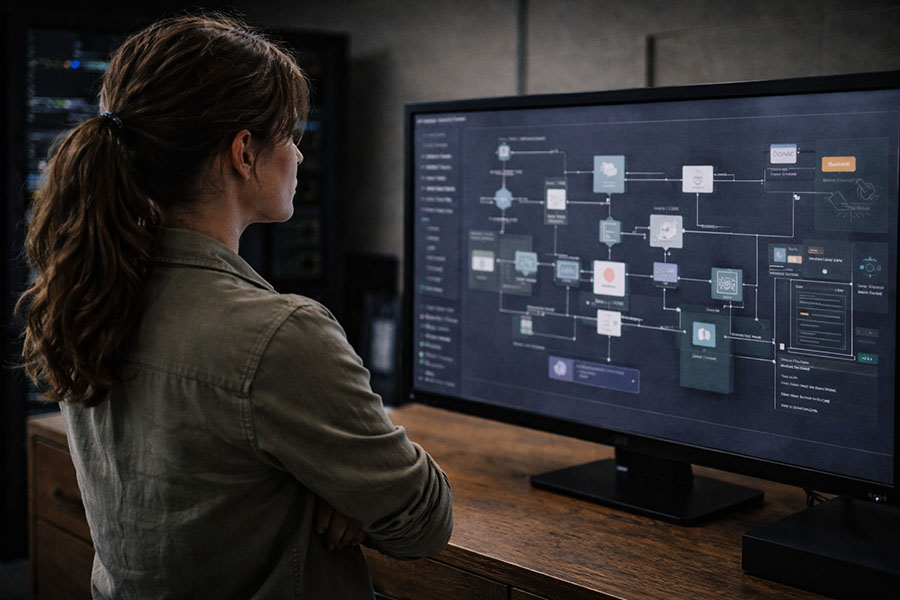
MCP, the standard connecting AI models to enterprise data
The Model Context Protocol is the emerging standard that allows LLMs to access external data and tools in a standardized way. What it is, how it works, and why major vendors are already adopting it.

RAG reduces AI model hallucinations
Retrieval-augmented generation anchors LLMs to verified sources, reduces hallucinations, and enables AI to respond with real, up-to-date data. How it works and why it has become the standard for enterprise AI applications.

AI agents work even when you don’t ask them to
AI agents are autonomous systems capable of planning, deciding, and acting without continuous human intervention. How they work, what sets them apart from simple assistants, and why they are changing the way companies organize processes.
