

GenAI in Finance Is Still in Pilot Mode. What Comes Next?
GenAI in finance: adoption doubled in one year but still stuck at the pilot stage. 63% of CFOs are optimistic about future value, but organizations are deliberately slowing spending to align with governance and risk management.
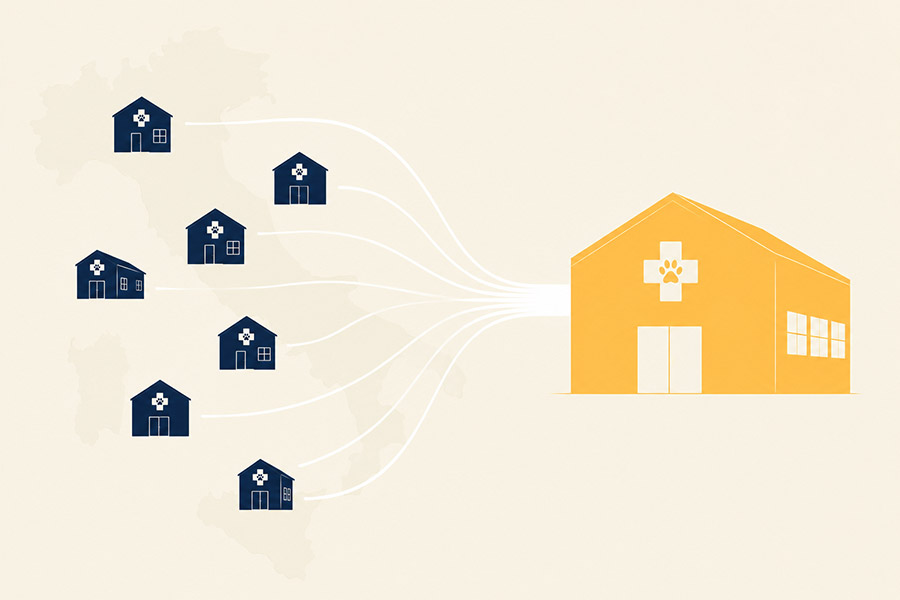
Veterinary clinic consolidation: Italy is the next hunting ground
IVC Evidensia operates more than 2,500 clinics in 20 countries. Mars Veterinary Health 3,000 facilities and 70,000 employees. AniCura 450 facilities in 14 European countries. In Italy AniCura has only 14 clinics, AVELIA was founded in 2024 as an Italian network. Italian consolidation will accelerate over the next 24-36 months under the push of Northern European private equity.

Cloud ERP, Reporting Automation, and AI: The Three Priorities of the Modern CFO
Cloud ERP, reporting automation, and business process automation are the technologies with the best combined profile of adoption, value, and future investment for CFOs in 2026. Data and analysis from the Finance Technology Bullseye.

GenAI and Finance: Where Investments Are Heading
The Finance Technology Bullseye 2026 analyzes 63 technologies across adoption, value, and future investment. GenAI is the number one priority, but most organizations are still in the pilot phase. Here is the complete map.

Omnichannel pharma in Italy: the paradox of the 64% F2F
Veeva Pulse 2025: 78% of global HCP interactions remain face-to-face. In Italy 64% of impactable sales come from direct contact, the highest share in EU5. Across Health measures that European HCPs want remote engagement at 60% and receive it at 40%. What it really means to orchestrate in a market that remains F2F-dominant.

Who Wins in the Enterprise Business Process Analysis Tools Market
BOC Group leads the Customers' Choice quadrant for enterprise business process analysis tools. A reading of peer review data to guide purchasing decisions in a market with few players but widely varying ratings.

Skin AI: where cosmetics end and medical devices begin
L'Oréal Beauty Genius recorded 480,000 conversations in the first six months after launch. Perfect Corp generated USD 69 million in 2025 with YouCam. Haut.AI is in partnership with Beiersdorf, NAOS Bioderma and Ulta Beauty. When AI promises diagnostics it shifts from cosmetic to medical device, falling under MDR and the high-risk EU AI Act.

Endless POCs and ROI Obsession: Where Companies Get AI Wrong
Six technical and organizational mistakes in the GenAI engineering and production phase: from compliance that blocks everything to data management, to the mistake of treating AI as a finished project.

Twelve Mistakes That Are Slowing Down AI in the Enterprise
Chinese companies have already walked the path of GenAI adoption and paid for specific mistakes. Twelve of these mistakes are documented and repeatable anywhere in the world. Knowing them in advance is invaluable.

The GenAI Use Cases You Can’t Afford to Miss in Corporate Communications
Content tailoring, audience response simulation, and disinformation intelligence are the GenAI use cases with the best value-to-feasibility ratio for communications teams. Here is why you should start here.

AI territory segmentation for the pharma sales force: the Italian prescription-data constraint
IQVIA Field Force Agent reports 27% time savings and 85% user satisfaction in 2025 early deployments. ZS ZAIDYN integrated with Salesforce Agentforce in January 2026. But Europe has no equivalent of the U.S. IQVIA Xponent: pharma territory segmentation in Italy must be built on different proxies and within union constraints on workplace mobility.

GenAI in Marketing and Communications
An analysis of 18 GenAI use cases for the communications function: which ones deliver real value, which remain hard to implement, and how to prioritize investments.
