

KOL management 2026: three generations in ten years
Veeva Link aggregates three million KOL profiles from 250 thousand public sources, IQVIA OneKey tracks 25 million of them as HCPs, H1 has brought them to twelve million after the 2025 acquisitions. KOL management has shifted from three-tier segmentation toward network analysis, but in Italy the Farmindustria Code of Conduct and Sanita Trasparente constrain every interaction: the design constraint is ethical, not technical.

Business Process Bottlenecks Are Invisible Without Data
Global spending on process mining software grew by over 30% in 2024. Gartner identifies five adoption drivers and evaluates 16 vendors in the 2025 Magic Quadrant. The real problem is not automating processes: it is understanding where they actually break down first.

Business Documents Are Not a Storage Problem
The Intelligent Document Processing market is worth $2.09 billion by 2026. Gartner counts over 100 vendors. The problem for companies is not finding a tool to archive documents: it is extracting useful data and feeding automated workflows reliably.

KYC in the Deepfake Era: Verifying Identity Has Become Harder
By 2026, 30% of companies will consider biometric verification systems unreliable when used in isolation. Deepfake attacks have grown by 200% in one year. How KYC changes when fraudsters use the same AI as defense systems.
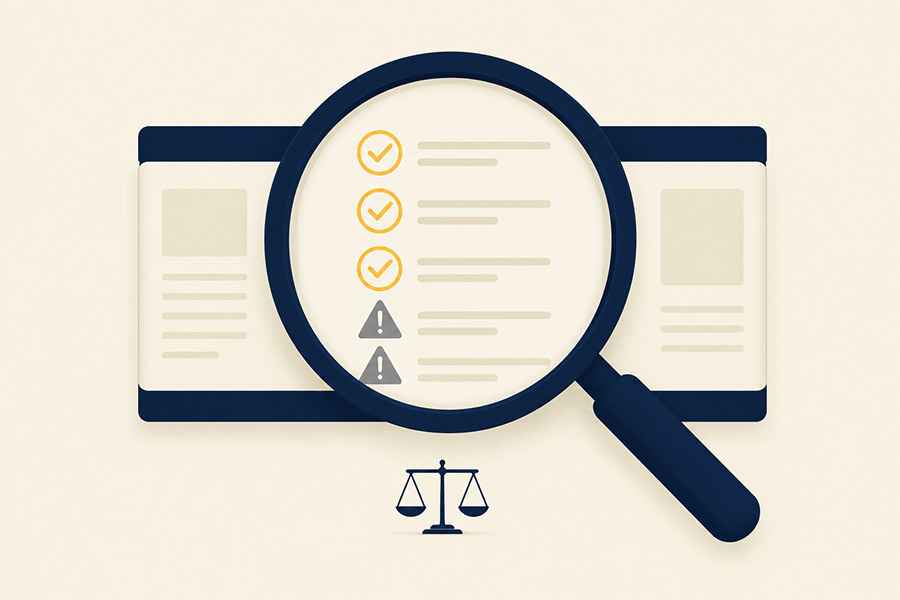
Nutraceutical claim compliance: the botanicals labyrinth and the 2025 NAS report
The 2025 NAS report: 45,762 inspections, EUR 197 million in seizures, 100 websites blocked for claims on supplements. The new AGCM regulation has been in force since November 2024, with sanctions up to EUR 10 million. The 2,000 botanicals claims "on hold" have been awaiting EFSA review since 2010. The 2024 CJEU ruling closed the grey area.

The Recruiter That Never Sleeps
By 2027, 75% of hiring processes will include AI proficiency tests. By 2028, one in four candidate profiles will be fake. AI is changing recruiting in ways that companies have not yet finished measuring.

Client Onboarding: The Work That AI Agents Are Taking Over
By 2029, agentic AI will resolve 80% of common customer service issues without human intervention. What changes in how companies onboard new clients, and why over 40% of projects will fail before reaching production.

Market access and AI in 2026: the 30,000-page JCA dossier
The EU HTA Regulation has been operational since January 12, 2025 for oncology and ATMPs. The Joint Clinical Assessment leads to dossiers of 10-30 PICOs per single product, up to 30,000 pages, with 90-100 days for submission. AIFA Resolution 88/2025 modernized the Italian framework, effective from April 1, 2026. AI for evidence synthesis is the constraint that decides who can sustain the pace.

Four GenAI Skills Every Worker Must Master
Gartner has identified the four generative AI skills that workers must develop in 2025: recognizing use cases, understanding the technology, writing effective prompts, and evaluating results. A practical guide for CIOs and HR leaders.

Approved Email in pharma: the loop worth 30% in prescriptions
Veeva HCP 360 2025: syncing an Approved Email within ten days of a visit increases the probability of prescription by 30%. 65% of HCP interactions are not synchronized. MLR review remains at 20 days in Europe and 50-60 in the United States. Indegene NEXT MLR Automation cuts the cycle by 30-50%.

Adopting GenAI Without Risk: The Personas and Landing Zone Method
Adopting GenAI without exposing sensitive data is possible with a structured approach based on risk personas and cloud landing zones. A practical guide for infrastructure and IT operations leaders.

Who Is Winning the Market for Business Process Automation Tools
Camunda and IBM are positioned in the Customers' Choice quadrant for BPA tools. An analysis of peer reviews to guide decisions in a market where automation and GenAI are changing the evaluation criteria.
